

Varanasi Sightseeing + Local Food Tour Package , Have you ever wondered what it would be like to feed both your soul and your stomach simultaneously? Varanasi offers exactly that—a city where spiritual awakening and culinary adventure happen side by side, often on the same ancient street. While most travelers come for the ghats, temples, and spiritual atmosphere, they quickly discover that Varanasi’s food scene is equally enchanting, equally historic, and equally capable of creating lasting memories.
A combined sightseeing and food tour package isn’t just about checking off tourist attractions and eating meals—it’s about understanding how deeply intertwined culture, spirituality, and cuisine are in this 3,000-year-old city. Every dish tells a story, every street corner reveals a tradition, and every bite connects you to generations of Banarasis who’ve called these lanes home. Ready to embark on a journey where monuments and mangoes, temples and tamatar chaat, ghats and ghee-soaked sweets create an unforgettable tapestry of experiences?
Why Combine Sightseeing with Food Tours?
Cultural Immersion Beyond Temples
Varanasi Sightseeing + Local Food Tour Package , Sure, you can visit the ghats and temples separately, then grab random meals wherever you find them. But here’s what you’d miss: the 300-year-old sweet shop where five generations have perfected their recipe, the tiny alley where locals queue for the city’s best samosas, the family-run lassi shop that’s been mentioned in travel journals since the 1970s. Food isn’t separate from culture in Varanasi—it is the culture, preserved in recipes, techniques, and traditions passed down through centuries.
Understanding Varanasi Through Its Flavors
Varanasi’s cuisine reflects its complex history. You’ll taste influences from ancient Vedic cooking traditions, Mughal culinary techniques, and modern innovations that somehow respect both. The same city that offers simple, sattvic (pure) vegetarian food for pilgrims also serves rich, elaborate dishes fit for kings. A combined tour helps you understand these contradictions, showing how food and spirituality, indulgence and asceticism coexist in Varanasi’s unique cultural ecosystem.
Morning Sightseeing: Spiritual Awakening
Sunrise Boat Ride on the Ganges
Varanasi Sightseeing + Local Food Tour Package , Your day begins before dawn—yes, it’s early, but trust me, this is when Varanasi reveals its most magical self. As you glide across the Ganges in a wooden boat, the rising sun paints the ghats in shades of gold and orange. Priests perform morning rituals, devotees take holy dips, and the city slowly awakens to temple bells and chanting. This isn’t just sightseeing; it’s witnessing a living tradition that’s remained unchanged for millennia.
Walking Tour of the Ancient Ghats
Varanasi Sightseeing + Local Food Tour Package , After the boat ride, you’ll explore the ghats on foot. Dashashwamedh Ghat bustles with activity even in the morning, while smaller ghats like Kedar and Harishchandra offer quieter, more contemplative atmospheres. Your guide explains the significance of each ghat, pointing out architectural details, sharing mythological stories, and helping you understand the daily rhythms of life along the river.
Kashi Vishwanath Temple Visit
Varanasi Sightseeing + Local Food Tour Package , The golden spires of this iconic Shiva temple call to believers from across the ghats. While navigating the crowds can be challenging, the spiritual energy is undeniable. The newly expanded Kashi Vishwanath Corridor has made access easier while preserving the temple’s sanctity. Your guide ensures you understand the customs, help you navigate the complex, and provide context for the devotion you witness.
Breakfast Stop: Traditional Banarasi Morning Bites
Kachori Sabzi – The Ultimate Breakfast
Varanasi Sightseeing + Local Food Tour Package , After spiritual nourishment, time for physical sustenance! Your first food stop might be a humble street-side stall that’s been serving since your grandparents’ generation. Kachori sabzi—crispy, flaky pastries stuffed with spiced lentils, served with potato curry—is Varanasi’s breakfast of champions.
Varanasi Sightseeing + Local Food Tour Package , The kachoris are fried to golden perfection in pure desi ghee, arriving at your plate piping hot. Break one open, and steam rises carrying the aroma of cumin, fennel, and asafoetida. Paired with aloo ki sabzi (potato curry) and tangy tamarind chutney, it’s comfort food that’s sustained generations of Banarasis.
Jalebi and Rabri – Sweet Morning Indulgence
Indians love starting the day with something sweet, and Varanasi takes this tradition seriously. Fresh jalebis—spiral-shaped, crispy, syrup-soaked treats made from fermented batter—emerge from bubbling oil like edible artwork. Paired with rabri (thickened sweetened milk with nuts), they create a breakfast dessert that’s both decadent and somehow traditional. Watching the halwai (sweet maker) expertly pipe batter into hot oil is entertainment in itself.
Mid-Day Exploration and Street Food Adventures
Exploring the Vibrant Markets
After breakfast, your tour winds through Varanasi’s labyrinthine markets. Vishwanath Gali, Thatheri Bazaar, and Chowk areas overflow with life—vendors shouting, rickshaws honking, incense smoke mixing with frying aromas, silk sarees fluttering like butterflies. This sensory overload is Varanasi in its purest form. Your guide navigates the maze confidently, stopping at strategically chosen spots where sightseeing and food experiences merge seamlessly.
Iconic Street Food Tastings
Midday brings a parade of street food experiences. Tamatar chaat—tangy, spicy tomato-based snack that’s unique to Varanasi—offers explosive flavors. Chooda matar (flattened rice with peas) provides lighter refreshment. Aloo tikki chaat, crispy potato patties drowned in yogurt, chutneys, and sev (crispy noodles), satisfies completely.
Each vendor has their own special twist, their own secret ingredient that locals swear makes their version the best. Your guide knows the legends and the locations, ensuring you taste the authentic versions, not tourist traps.
Afternoon Cultural Sites
Sarnath Buddhist Complex
After a satisfying food exploration, a short drive takes you to Sarnath, where Buddha delivered his first sermon. This archaeological site offers beautiful contrast to Varanasi’s intensity—peaceful gardens, ancient stupas, and meditation-friendly spaces.
The Dhamek Stupa rises majestically, while the museum houses priceless Buddhist artifacts including the famous Lion Capital. This cultural intermission lets your stomach settle while your mind absorbs different spiritual traditions that have coexisted in this region for centuries.
Banaras Hindu University
BHU’s sprawling campus showcases Indo-Gothic architecture and houses the Bharat Kala Bhavan museum with its impressive art collection. The New Vishwanath Temple within campus grounds offers a less crowded alternative to the main temple. Walking through BHU’s tree-lined avenues provides respite from the old city’s intensity while showing Varanasi’s educational and cultural contributions to modern India.
Evening Food Trail and Ganga Aarti
Chaat and Snack Varieties
As evening approaches, Varanasi’s street food scene reaches peak energy. Your tour guide leads you through an evening chaat crawl that might include dahi puri (crispy shells filled with potatoes, chickpeas, yogurt, and chutneys), papdi chaat (crispy wafers with similar toppings), and golgappas/pani puri (hollow crispy balls filled with spicy water). Each vendor has loyalists who swear nobody else makes them quite right. The theatrical presentation—vendors skillfully assembling multiple elements with speed and precision—is as entertaining as the eating.
Traditional Thali Dinner
Before the evening Aarti, many tours include a proper sit-down dinner featuring a traditional Banarasi thali. This isn’t restaurant food dumbed down for tourists—it’s authentic home-style cooking showcasing the region’s culinary repertoire. Expect dishes like baigan ka bharta (roasted eggplant), kadhi (yogurt-based curry), seasonal vegetable preparations, dal, multiple breads, rice, pickles, and papad. The variety demonstrates the sophistication of vegetarian Banarasi cuisine, proving that meat-free doesn’t mean flavor-free.
Culminating at Ganga Aarti
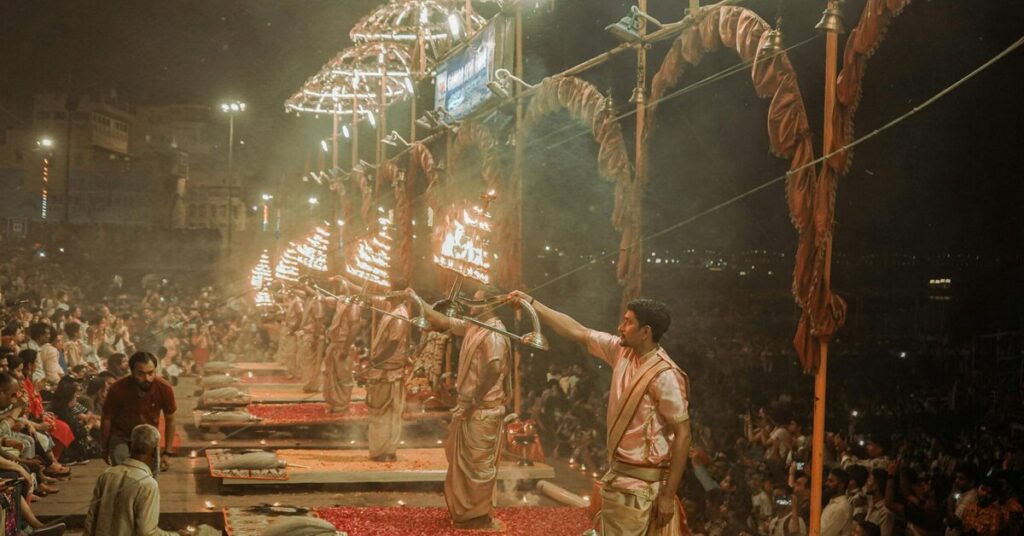
Your day culminates at Dashashwamedh Ghat for the spectacular evening Ganga Aarti. After a day of feeding your body and mind, this ceremony feeds your soul. Seven priests perform synchronized rituals with massive fire lamps, creating a mesmerizing spectacle as thousands gather to witness this daily offering to Mother Ganga. The sounds—bells, conches, chanting—the sights—flames against the darkening sky—and the energy—collective devotion—create an unforgettable finale to your combined sightseeing and food adventure.
Must-Try Varanasi Delicacies
No Varanasi food tour is complete without these iconic items:
Banarasi Paan: The elaborate betel leaf preparation that’s more ritual than refreshment, with dozens of ingredients wrapped in silver foil
Malaiyo/Nimish: Available only in winter mornings, this ethereal milk foam dessert literally melts on your tongue
Launglata: Deep-fried, sugar-syruped sweet shaped like cloves, crispy outside and syrupy inside
Chena Dahi Vada: Soft lentil dumplings in sweetened yogurt, Varanasi’s take on this popular snack
Baati Chokha: Baked wheat balls served with mashed roasted vegetables, rustic and satisfying
Lassi: Thick, creamy yogurt drink served in clay cups, sometimes topped with malai (cream)
Makhana Kheer: Fox nut pudding, especially during religious occasions
What’s Included in Combined Tour Packages
Typical combined packages include:
Transportation: Air-conditioned vehicle for longer distances; walking for old city exploration
Professional Guide: Knowledgeable about both historical sites and food culture
Entry Fees: Major monuments and temples (where applicable)
Food Tastings: Multiple stops covering breakfast, snacks, and dinner (usually 8-12 food items)
Boat Ride: Morning or evening Ganges boat experience
Water: Bottled water throughout the tour
Duration: Usually 8-10 hours for comprehensive full-day packages
Some premium packages also include cooking demonstrations, visits to home kitchens, or special access to heritage restaurants.
Dietary Considerations and Customizations
Varanasi is vegetarian heaven, but individual dietary needs vary. Reputable tour operators accommodate:
Vegan requirements: Dairy-heavy Banarasi cuisine can be challenging, but operators can identify vegan-friendly options
Jain dietary restrictions: Many vendors already cater to Jain customers (no onion, garlic, root vegetables)
Gluten sensitivities: While wheat-heavy, alternatives like rice-based items exist
Spice tolerance: Not everyone handles Indian spice levels; guides can request milder preparations
Portion control: Concerned about overeating? Tours offer small taste portions rather than full servings
Always communicate dietary restrictions when booking. Good operators appreciate advance notice and can plan accordingly.
Best Tour Duration and Timing
Full-day tours (8-10 hours): Comprehensive experience covering major sights and extensive food sampling
Half-day options: Either morning (sightseeing-focused) or evening (food-focused) tours available
Multi-day packages: Some operators offer 2-3 day packages for deeper immersion
Best seasons: October-March offers pleasant weather; summer (April-June) can be challenging due to heat
Starting times: Early morning starts (5-6 AM) maximize the experience, catching sunrise and morning rituals
Safety and Hygiene on Food Tours
Food safety concerns are valid, but reputable tour operators prioritize hygiene:
Vendor selection: Established operators choose vendors with proven track records and high turnover (ensuring freshness)
Observation: Your guide watches food preparation, avoiding questionable hygiene practices
Bottled water: Always provided; never drink tap water or use ice from unknown sources
Hand sanitization: Guides carry sanitizer for use before eating
Gradual introduction: Good tours don’t overwhelm your system with too much too fast
Medical considerations: Operators maintain first-aid kits and know nearby medical facilities
Still worried? Start conservatively, increase adventurousness as your stomach adjusts, and trust your guide’s expertise.
Conclusion
A Varanasi sightseeing and local food tour package isn’t just a convenient way to see the city—it’s the most authentic way to experience it. Varanasi reveals itself not just through its temples and ghats, but through the kachoris sizzling in ancient pans, the lassi served in clay cups that dissolve back into earth, the paan wrapped with ceremony and care, and the street vendors who’ve occupied the same corner for generations. This combination tour acknowledges a simple truth: culture lives in cuisine, history hides in recipes, and spirituality manifests in sharing food.
By the end of your day, you won’t just have seen Varanasi—you’ll have tasted it, smelled it, felt it, and understood it in ways that monuments alone could never teach. Your camera roll will be full, your stomach satisfied, and your heart touched by a city that feeds body and soul with equal generosity.
FAQs
1. Is street food in Varanasi safe for foreign tourists?
When consumed on guided tours from established vendors, Varanasi street food is generally safe. Reputable tour operators select vendors with good hygiene practices and high customer turnover (ensuring freshness). Your body needs time to adjust to new bacteria and spices, so going gradually helps. Avoid raw vegetables, ensure food is freshly cooked and hot, drink only bottled water, and follow your guide’s recommendations. Most tourists on guided food tours experience no issues.
2. Can I customize the tour if I’m vegetarian, vegan, or have food allergies?
Absolutely! Varanasi is predominantly vegetarian, so that’s already the default. For vegans, inform the operator in advance—they’ll identify dairy-free options or request modifications. Food allergies (nuts, gluten, etc.) require advance communication so guides can plan alternative stops or request special preparations. Good operators appreciate knowing dietary restrictions beforehand and will work to ensure you enjoy a full experience within your requirements.
3. How much walking is involved in these combined tours?
Expect moderate to heavy walking, especially in the old city where vehicles can’t access narrow lanes. You’ll typically walk 4-6 kilometers throughout the day, often on uneven surfaces and steps. Comfortable walking shoes are essential. If mobility is a concern, inform operators—they can adjust itineraries with more vehicle time, shorter walking segments, and rest breaks. Some portions (like Sarnath and BHU) involve minimal walking as you can drive between points.
4. What’s the best time of year for a combined sightseeing and food tour?
October through March offers the best weather—pleasant temperatures, clear skies, and comfortable walking conditions. Winter mornings (November-January) might be foggy but provide special treats like malaiyo (seasonal winter dessert). April-June is extremely hot, making extensive walking challenging. Monsoon (July-September) brings rain that can disrupt outdoor activities. Festival times like Diwali or Dev Deepawali offer special cultural experiences but also mean larger crowds and higher prices.
5. Are these tours suitable for children and elderly travelers?
Yes, with considerations. The sensory intensity and long days might overwhelm very young children. Most tours work well for kids 8+ who can handle walking and are adventurous eaters. For elderly travelers, pace and mobility matter—communicate any limitations when booking so operators can adjust walking distances, provide more rest breaks, and ensure comfortable transportation. Many operators offer private tours that can be customized for family groups with mixed ages and abilities.





Comments are closed.